
SEO-Focused Web Content Writers
A Simple Equation:
Add High-Quality Content to Your Website Regularly = You’ll Make More Money.
Fresh, high quality content, added regularly, is what the search engines like Google want to see. This is the process of SEO (search engine optimization), which in it’s most basic terms can be thought of as “getting Google and others to like you”.
And the more they like you, the higher up you’ll show in search results - and get more online visitors in the end. This means more leads, and ultimately more online revenues for you.
How do you increase your SEO?
You build SEO primarily through adding new content on your website. This is usually in the form of new pages on your site, or a weekly (at least) blog.
Our web content writers do the research to know what your potential customers care about, and write posts they know will appeal to them. These types of posts show Google that you are a thought leader in your industry or field, and that they should share your site more often for those searching for businesses like yours.
The statistics show the facts:
.
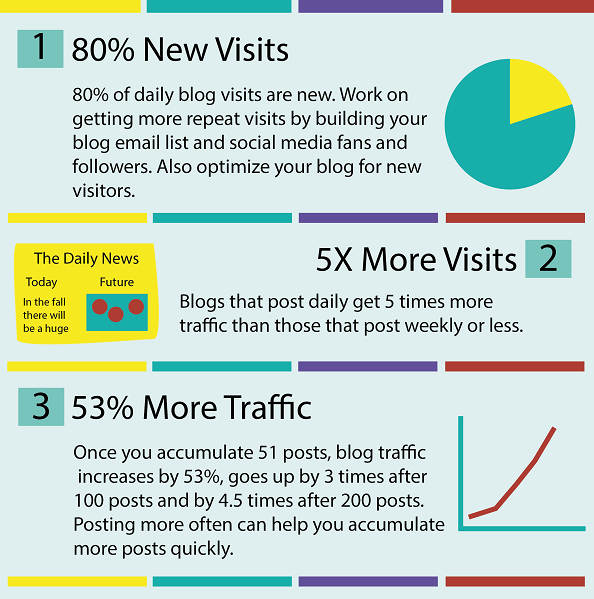
- A vast majority of consumers pick a link on the FIRST PAGE of results. If customers can’t find you there, they usually don’t find you at all
- About 70% of people now say they discover a new company from articles instead of ads
- Invest more in high-quality, evergreen posts instead of temporary advertising… which disappears the exact moment you stop writing checks!
Content on your website can still be helping you attract more attention many years after you’ve paid for it!
If this is so simple, why doesn’t everyone do it?
Good question.
First of all, most business owners don’t know the statistics and facts that you just read. They aren’t aware of the benefit.
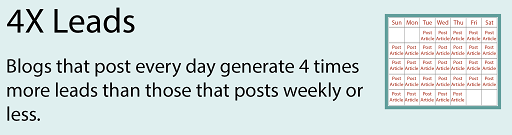
For the rest the answer is time, desire and skill. As you see, the more frequently you add new material the more quickly you’ll see results.
But most business owners don’t have the time (or other staff) to stick with a publishing calendar, and/or they don’t enjoy writing in the first place.
They also lack the knowledge of SEO rules that make for a really effective post.
And that’s where I come in.
If you’d like to learn more, hit the button below and let’s get a conversation going!
Jim

Top 14 Reasons Email Will Still Be Here For Some Time
Oct 19th
Tweet
So we have all been talking a lot about social networks, and how they are fundamentally changing the way that we communicate. But while it is certainly true that these networks are becoming more and more vital to reaching your customers, clients and members, that doesn’t mean that email marketing has lost its importance too.
In fact, the two communication strategies can co-exist nicely, and address different needs for reaching out to consumers. Here are the Top 14 reasons that email isn’t going away anytime soon:
1. People still send hand-written letters via snail mail, even though they could instead make a phone call, send an email, text message, or status update.
2. Nearly all sites on the web that require registration still require an email address. Some are starting to integrate social media into this process (through things like Facebook Connect), but that is still a small fraction, and they typically still allow for email information as well.
3. Email notifies you of updates from all social networks you are a part of (provided your settings are set up that way).
4. Email is universal, and social networks are not (at least not yet!). Nearly everybody on the web has an email address. Most More >
Getting Responses With Email Marketing - Part Four
Oct 12th
Tweet
4) Images: Let Pictures Tell The Story
So we’ve all heard that a picture is worth a thousand words. What does that mean for your E-Newsletter?
Your graphics can be the difference between someone paying enough attention to your email marketing to click a link or read an opening paragraph, or moving on. Always make sure that whatever you use is directly or obviously connected to your feature, story or promotion. Don’t make people have to “work” or guess what they are viewing and how it relates to the content…unless of course this is part of a well-thought out marketing plan! And simpler is typically better.
Finding good photos or illustrations online certainly isn’t hard these days. (With almost 100% broadband coverage now, video and audio are now a component of some E-Newsletters too, but more on these topics another day.) One of the top and fairly inexpensive options is iStockPhoto.com, although many other libraries exist. And don’t forget the multitude of royalty-free images available on Google, Flickr or Yahoo Images. (But you should always be sure to double check that the images you are using aren’t copyright protected.)
Following our theme of trying different options until you find one that works best for More >
Getting Responses With Email Marketing - Part Three
Oct 5th
Tweet
3) Your Links Are Important!
So you’ve gotten your recipient to open and view your E-newsletter with your subject line and offer. But are they clicking your links? That’s the real purpose of course!
You know by now that your E-news needs to be rich in links. It doesn’t cost you anything to include links within your content, and you have much to gain. Make sure your links are relevant to what you are trying to communicate, of course, but unless the article becomes difficult to read due to an extreme overabundance of links, you should be including them.
So if your E-newsletter has 5 links to your offer, why not try including 5 more - and see if your response increases? And also be mindful of the previous tip, and make sure that many of your links are happening above the fold and not below!
You can then look and compare how many more times the links higher up in your copy are being visited as opposed to the ones that are lower on the page. Then ask yourself a question: Are these the links that matter most to your business? If not, here is another great opportunity to make adjustments to your newsletter, More >